Celebrating Resilience, Innovation, and Visibility
Dhaka Pride 2025: Sustaining Visibility Amidst Backlash and Uncertainty
Reimagining Pride Through Technology: The First AI-Hosted Event
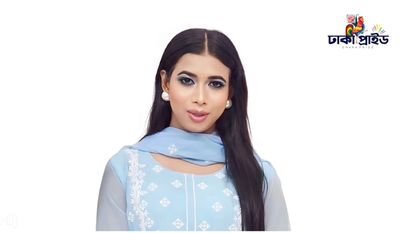
A defining and forward-looking feature of Dhaka Pride 2025 was its integration of generative artificial intelligence, marking the first time the event was hosted by an AI-generated figure. The virtual host was modelled after Sanjiboni Sudha, Executive Director of Inclusive Bangladesh, whose lived experience embodies both the courage and consequences of human rights advocacy.
Sanjiboni’s journey—facing backlash from political and religious groups, losing her professional and academic opportunities, and ultimately seeking protection in Canada—reflects the broader realities faced by many LGBTIQ+ human rights defenders in Bangladesh today.
By reintroducing her presence through AI, Dhaka Pride made a profound statement:
that voices cannot be erased, even when individuals are silenced, displaced, or forced into exile.
The use of AI also signals an important shift toward technological resilience and future-oriented advocacy, exploring how emerging tools can enable continuity, amplify voices, and overcome structural barriers. For the first time, the event was presented in English, expanding accessibility for global audiences and diaspora communities, while also highlighting the existing technological limitations in producing high-quality AI content in Bangla—a gap that reflects broader inequalities in digital resource access.
Opening Performance: Argha Adhikari (2021)
The event commenced with a dance performance by Argha Adhikari, a renowned queer artist from West Bengal, originally featured in Dhaka Pride’s inaugural 2021 celebration. Performed to Rabindranath Tagore’s “Bohe Nirontoro Anondodhara,” the piece evokes a sense of boundless, uninterrupted joy and universal belonging.
Through a queer interpretative lens, the performance reflects the essence of Pride as an awakening—where identities long suppressed emerge into visibility and recognition. The imagery of an “eternal flow of joy” and an “undivided world” resonates deeply with the aspirations of LGBTIQ+ communities striving for dignity, inclusion, and coexistence beyond imposed divisions.

Tarin Tani Bashar (2022): Celebrating Difference as Beauty
The second segment revisited the 2022 performance of Tarin Tani Bashar, Project Director of Inclusive Bangladesh and a consistent artistic voice within Dhaka Pride. Her dance to Tagore’s “Ogo Shaotali Chele” expresses admiration for identities that exist beyond normative societal expectations.
Within a queer framework, the piece speaks to the subtle yet profound nature of LGBTIQ+ love and attraction, often existing in quiet defiance of rigid social structures. It reaffirms that difference is not deviation—but a natural, meaningful, and beautiful expression of human diversity.

S M Mominul Islam (2023): Poetry, Language, and Assertion of Humanity
A powerful and politically resonant highlight of the programme was the 2023 poetry recitation of “Hamsio Manush” by S M Mominul Islam, delivered in the queer linguistic form known as Ulti. His work asserts a fundamental and often contested truth:
that queer individuals are human, and their rights—to exist, to love, and to live with dignity—are non-negotiable human rights.
The inclusion of this performance in 2025 carries heightened urgency and poignancy, as the poet himself was compelled to seek refuge in the Netherlands following increased vulnerability and threats amid political upheaval.
In this way, the performance transcends art—it becomes a testimony of survival, displacement, and resistance.

Kazi Raihan (2024): Fluidity, Renewal, and Coexistence
From Dhaka Pride 2024, the dance performance of Kazi Raihan, now based in the United Kingdom, was featured, set to Tagore’s “Borisho Dhara Majhe.” The song’s imagery of rain symbolises renewal, nourishment, and the dissolution of boundaries.
Through a queer lens, this reflects the fluidity of identity and the universality of human experience, challenging rigid norms and advocating for inclusive coexistence. The performance serves as a quiet yet powerful call for societies—particularly those rooted in conservatism—to embrace diversity as an integral part of collective life.

Closing Performance: Herongee Chakma & Rajhuni Chakma – Tribal Queer Narratives
The programme concluded with a deeply moving performance by Herongee Chakma and Rajhuni Chakma, two queer Indigenous artists, dancing to the traditional Chakma song “Utton Pege Mege Mege.”
The song’s longing for freedom—expressed through imagery of flying with birds and belonging to the land—takes on layered meaning when performed by queer Indigenous individuals. Their performance asserts that queer identities are not external or imposed, but inherently part of cultural, ecological, and national landscapes.
This segment powerfully bridges tribal, queerness, and belonging, reclaiming space within narratives that have historically marginalised both.